Do you trust AI enough to upload your medical records?
Would you trust artificial intelligence to help guide a medical decision?
Would you trust it enough to upload ten years of lab results, biopsy reports, and relapse history for analysis?
Scary thought… or is it?
What if you asked it to act in the combined role of a clinical researcher trained extensively in immunology and nephrology — to search updated, peer-reviewed medical literature and look for potential links between IgE levels, allergen exposure, autoimmune disease, and a specific kidney condition — while citing every single source behind every claim it made?
What if it maybe worked?
We Already Live in the AI Era. The Question Is How We Use It.
We’re past the point of debating whether artificial intelligence is part of daily life. It already is. The real question is what we choose to do with it.
Some people use it as a faster Google. Ask a question, get an answer, move on.
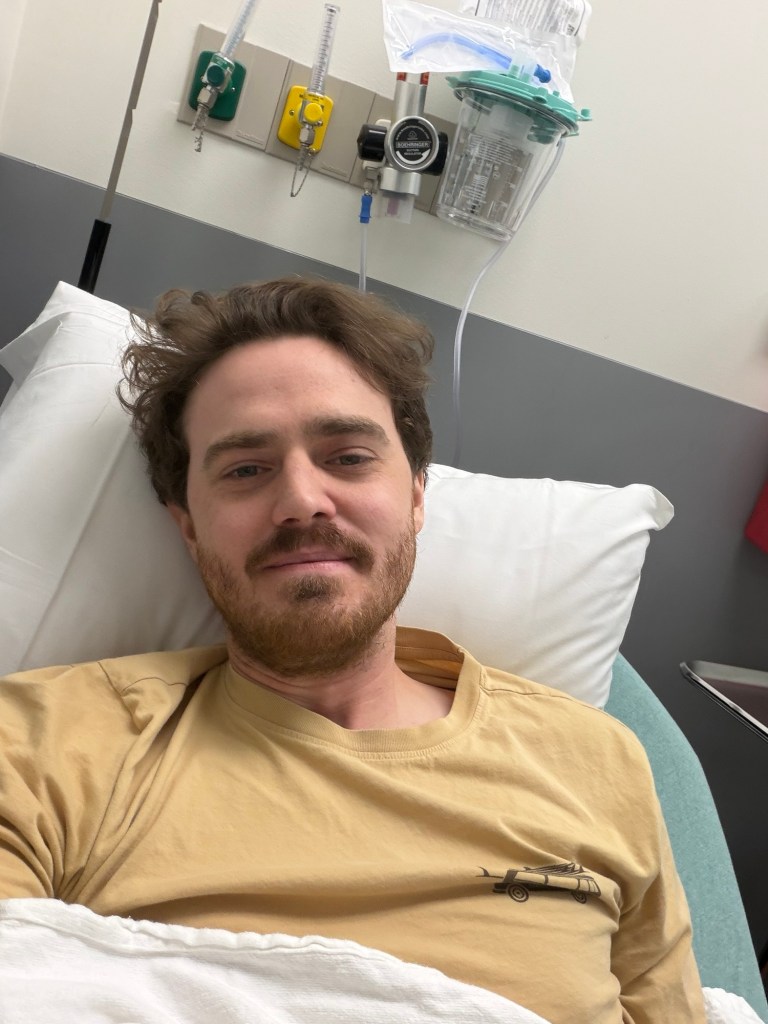
I used it as something closer to a research partner — a tool to dig into my own decade-long medical history and look for patterns nobody had connected yet. Flags. Triggers. Correlations between my allergy panel and a rare kidney disease I’ve now battled nine times since 2016.
I’ve also used AI to train for and finish a sub-3-hour marathon. To plan meals. To help sleep train our daughter. I’m not exaggerating when I say it’s become one of the more useful tools in my life over the past year. I digress — but only slightly, because all of those examples point to the same thing: AI is best when it’s helping you show up more prepared for something that actually matters. When you use it dynamically rather than like a search engine.
Walking Into My Nephrologist’s Office With a Different Kind of Preparation
Going into a recent appointment, I knew I wanted to be careful about how I brought this up.
Some people don’t even realize a tool like this is available to them. Others explicitly trust their doctor and feel no need to bring outside research into the room at all.
I trust my doctor too. Genuinely. But trusting my doctor has never meant I show up with nothing.
Here’s the thing about a chronic illness — your specialist has seen hundreds of patients across their career. I’ve only ever lived in one body, for thirty-three years, and I’ve watched that body relapse nine separate times. Nobody on earth has more raw, lived data on my specific case than I do. I just never had a practical way to organize ten years of that data until recently.
So I built one.
Building an Actual Case, Not Just a Theory
I asked AI to pull any published medical articles it could find surrounding allergies and MCD, autoimmune disease as whole, even asked for articles on relocation and how that could impact IgE. I now have roughly 21 published medical sources pertaining to my specific case. My questions are seemingly never ending. At some point my wife started asking if I was writing a novel or talking to a doctor. What followed was interesting.
Nine kidney relapses, mapped against nine years of allergen data from a certified counting station in Atlanta. A blood test that came back showing my IgE — a marker of allergic immune activity — at nearly fifteen times the upper limit of normal, alongside extremely high reactions to specific local allergens. A four-and-a-half-year remission that, when I looked closely, lined up almost exactly with the lowest allergy burden period of my adult life.
Here’s the detail that AI pointed out, and really kept coming back to. In nine years, across nine relapses, I have never once relapsed in December or January — the two months my city’s allergy season goes quiet. Every other month on the calendar has at least one relapse on it. Not one December. Not one January. Coincidence, maybe. But that single pattern is what shifted my thinking from ‘this is probably nothing’ to ‘this is worth bringing to a doctor.’
The key here, which I want people to understand, is that I was never fully relying on AI for the answer. I was asking it to pull published, peer-reviewed articles that I could read myself, paired with its analysis to help me cross-reference and connect what I was finding. AI didn’t tell me what to believe. It helped me find the right questions and the right sources faster than I could have on my own.
None of this is proof of anything on its own. But it was enough to be worth asking about out loud, with real data behind the question instead of just a hunch.
I walked into that appointment with an actual document. Timelines. Tables. Cited sources I could point to if asked. A hypothesis stated as a hypothesis — clearly labeled as something I was raising for discussion, not something I was diagnosing myself with.
The Doctor Didn’t Dismiss It. That Mattered More Than I Expected.
My nephrologist didn’t wave it off. He also didn’t have strong research sitting on his side of the table for it yet. What he said, essentially, was: let’s keep talking about this. He didn’t tell me I was crazy for considering relocation alongside treatment.
That response told me something. This wasn’t AI replacing a doctor’s judgment. It was AI helping me walk in as the most prepared, most informed version of myself that doctor had likely ever sat across from.
The Real Story Isn’t Whether AI Can Diagnose You
It can’t. It shouldn’t try to. Anyone telling you otherwise is selling you something.
The more interesting question, the one I think more people should be asking, is whether AI can help you become a sharper, more engaged partner in your own care. Whether it can help you organize the mess of a decade’s worth of records into something a physician can actually use in a fifteen-minute appointment. Whether it can help you ask better questions instead of just hoping your doctor thinks to ask them first.
For me, so far, the answer has been yes.
I don’t know yet whether my hypothesis about allergies and my kidney disease will hold up. I may find out it’s wrong. And that would be fine. I know I showed up to that conversation more prepared than I’ve ever been in nine years of relapses — and that preparation didn’t come from a textbook or a specialist.
It came from a tool that didn’t exist in any meaningful way the first time I sat in that same waiting room, a decade ago.
That, to me, is worth writing about.
 Logan Pethel
Leave a comment